Did you want full control over your solar panel system, but are confused about the size of the solar charger controller? Choosing a solar charger controller is quite simple and difficult at the same time. You have to think carefully and consider different factors. One wrong decision can destroy your whole solar panel system.
In this article, we will discuss the 30A vs 50A solar charger controller difference, provide simple examples to help you understand the functionalities of both, and discuss use cases so that you can know which one you should use.
The Simple Comparison: Fire Hose vs. Garden Hose
Consider amperage as a water pipe’s diameter:
Garden Hose = 30A Controller
Ideal for filling a small pool or watering your plants. It has limitations, but it can manage a good flow.
Fire Hose = 50A Controller
Designed to manage large volumes of water in an emergency. Far greater capacity than what you would require for daily activities.
You shouldn’t use a 30A controller for a huge solar array, just as you wouldn’t use a yard hose to put out a house fire. The controller must be the right size for the electrical “flow” in your system.
30a vs 50a Solar Charger Controller Difference: The Right Answer
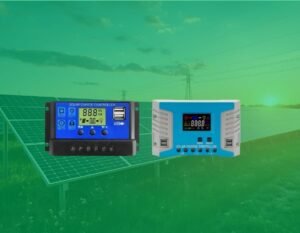
The biggest difference you need to know about is the amount of power each one can handle. A 30A solar charger controller works perfectly for a more compact system without a lot of panels. But if you have a bigger system that produces a lot of energy, then you will need a 50A solar charger controller because it is built for that job.
How to calculate the correct controller size?
Calculation of the solar charger controller is straightforward; you just have to use this simple formula.
Amperes = Watts / Volts
This formula helps you know the amperes or current your solar panel produces, which helps you decide between a 30A or 50A controller by putting your system values in the formula. These are some practical examples for your better understanding.
Quick Sizing Guide:
For 12V Systems:
30A controller: Handles up to 400W of solar panels
50A controller: Handles up to 700W of solar panels
For 24V Systems:
30A controller: Handles up to 800W of solar panels
50A controller: Handles up to 1,400W of solar panels
For 48V Systems:
30A controller: Handles up to 1,600W of solar panels
50A controller: Handles up to 2,800W of solar panels
When do you use a 30A Solar Charge Controller?
If your system resembles these, then the 30A controller is what you need:
- Systems smaller than 400W for 12V batteries or 800W for 24V batteries
- Van Life & RV Setups with Minimal Roof Space for Panels
- Backup emergency systems for charging phones and other necessary devices
- Budget-minded projects where you know you won’t be adding to the system
- Small power-needs cabins and shed (lights, small fridge, devices)
The 30 Amp controller is a great, low-cost option for small to medium-sized systems where you’re pretty sure of your final configuration.
When do you use a 50A Solar Charge Controller?
If your system resembles these, then the 30A controller is what you need:
- Systems that are greater than 400W on 12V batteries or 800W with 24V batteries
- Future growth plans, hoping to add more panels later
- Big off-grid homes with a lot of mechanicals
- Workshops and small industrial applications where powered tools are used.
- The fax machine system is also air-conditioned or otherwise serviced with high-power equipment.
- When you want to oversize your solar array for more output on cloudy days
The 50A controller’s biggest benefit is the future-proofing. Though more expensive at first, it could prevent you from having to buy a whole new Pro Controller if you expand your system down the line.
The Safety Alert: The Dangers of Undersizing
It is impossible to overstate that the charge controller that is too small should never be used. If the current generated by your solar panels exceeds the rating of your controller:
- Overheating of the controller
- Internal parts may melt or ignite.
- Battery charging may be stopped via an automatic shutdown.
- Your controller is probably permanently damaged.
- The warranty of the equipment has expired.
When determining your needs, always round up. Select the 50A model, never the 30A, if your calculations indicate that you require a 35A controller.
The answer to the question 30A vs 50A solar charger controller difference is now clear to you. The main thing is your system’s goal when you are choosing one. A 30A solar charger controller works perfectly for a more compact system without a lot of panels. But if you have a bigger system that produces a lot of energy, then you will need a 50A solar charger controller because it is built for that job.